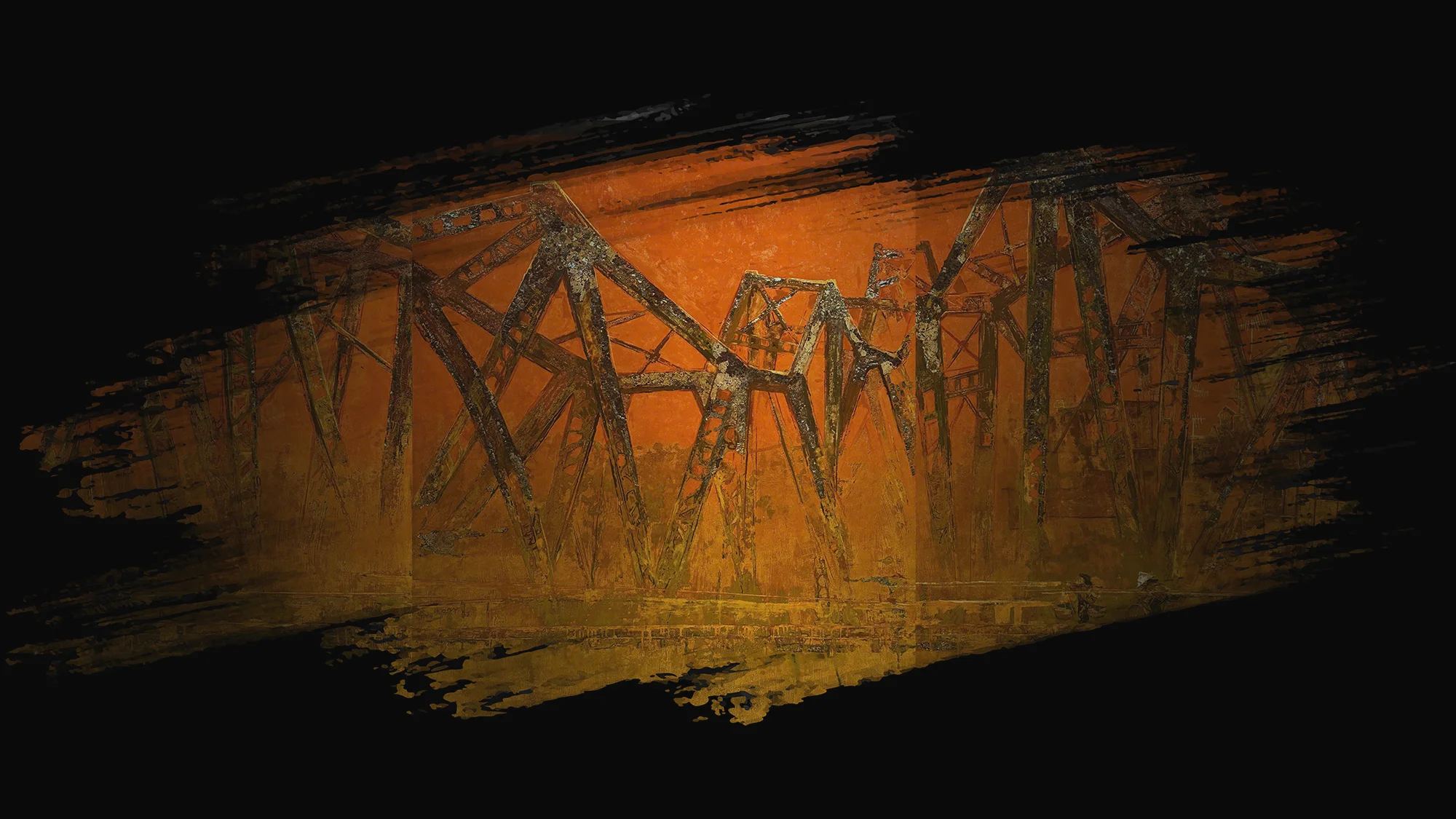
The Art of Layers and Time
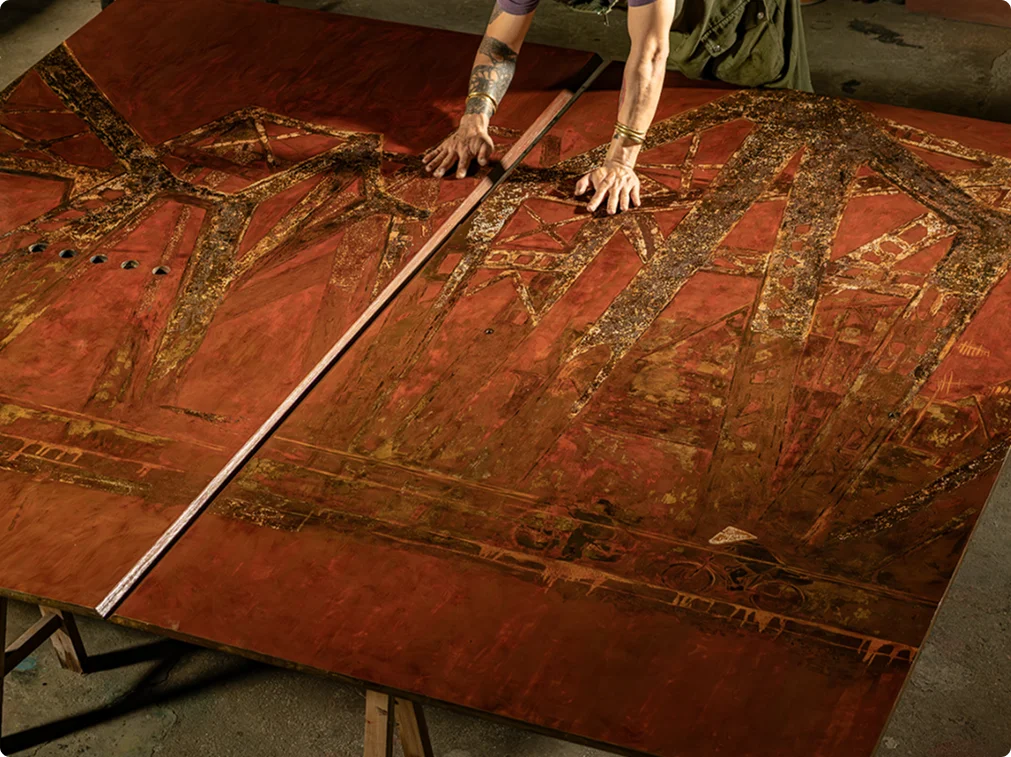
A lacquer surface is built through layers of material, time, and patience. What is covered may later be revealed, allowing color, light, and texture to slowly emerge from beneath the surface.
Material
Lacquer — More Than a Surface
A material shaped by matter, the human hand, and time.
Lacquer first draws us in through its surface: deep and quiet, sometimes dark like an empty space, sometimes illuminated by gold, silver, vermilion, or the subtle iridescence of mother-of-pearl. Yet what we see is only the final layer of a much longer process hidden beneath.
Long before lacquer became a language of painting, it had already existed within Vietnamese life through everyday objects, devotional sculptures, ritual objects, and architectural elements. From a material used to protect and decorate surfaces, lacquer gradually entered the realm of art and became part of the image itself.
Lacquer, therefore, is more than color applied to a plane. It is an encounter between material and human touch, between what can be controlled and what only reveals itself with time.
ORIGIN
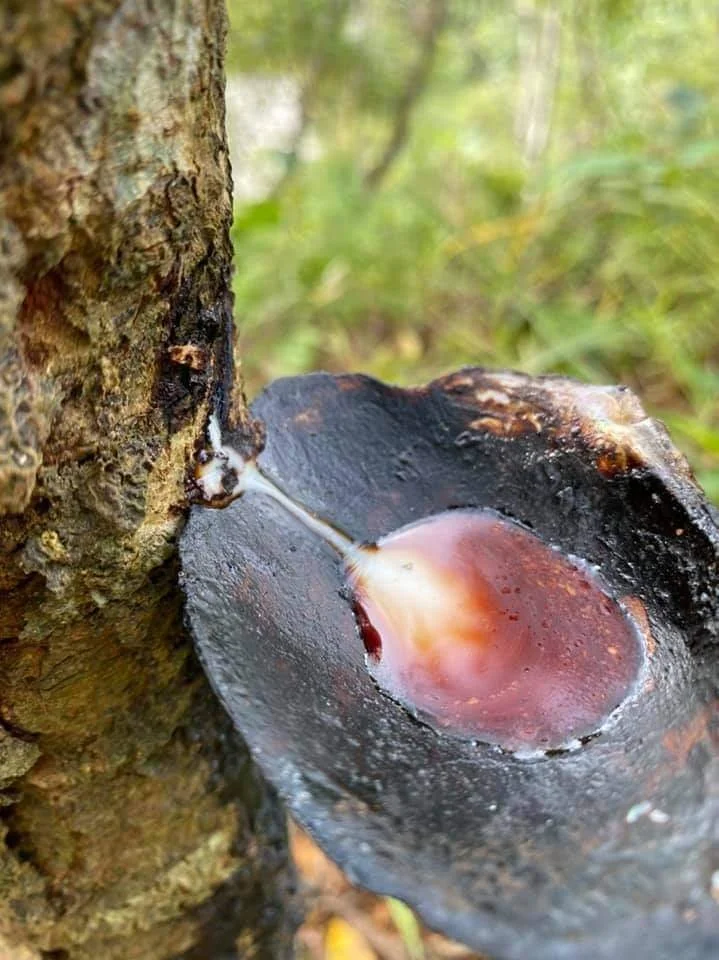
From the Sap of the Lacquer Tree
Every depth within lacquer begins with something entirely natural.
The story begins with the sap of the lacquer tree. Through small incisions made in its trunk comes the natural resin traditionally known in Vietnam as sơn ta. Once harvested and processed, it can produce distinctive tones such as translucent warm brown lacquer and the profound black of traditional lacquer finishes.
Natural lacquer is not a material that can be rushed. It requires suitable humidity to cure, time between each coating, and a deep understanding of its behavior.
To work with lacquer is therefore also to learn patience. The artisan does not simply impose form upon the material, but observes it, waits for it, and works according to its own rhythm.
Here, time does not exist outside the artwork.
Time lives within the material itself.
LAYERS
When Materials Create Depth
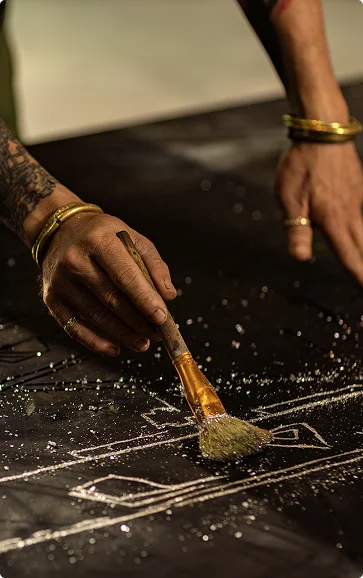
Lacquer, vermilion, gold, silver, eggshell, and mother-of-pearl meet within layers that are never fully visible.
A lacquer surface is built from materials with very different qualities: the deep black of lacquer, the warmth of vermilion, the metallic glow of gold and silver, the natural fractures of eggshell, and the shifting blue, violet, and pearl-like tones of mother-of-pearl.
Yet in lacquer, these materials do not necessarily remain on the surface to be seen immediately. Gold may be buried beneath layers of lacquer. Eggshell may sink into darkness. A color may appear only faintly after the layers above it have been carefully polished away.
The beauty of lacquer, therefore, does not lie in each material alone, but in the relationships between them. A luminous layer beneath a darker one. A smooth surface beside something rough. A clearly visible detail beside something that survives only as a trace.
One layer exists within another. And from there, depth begins.
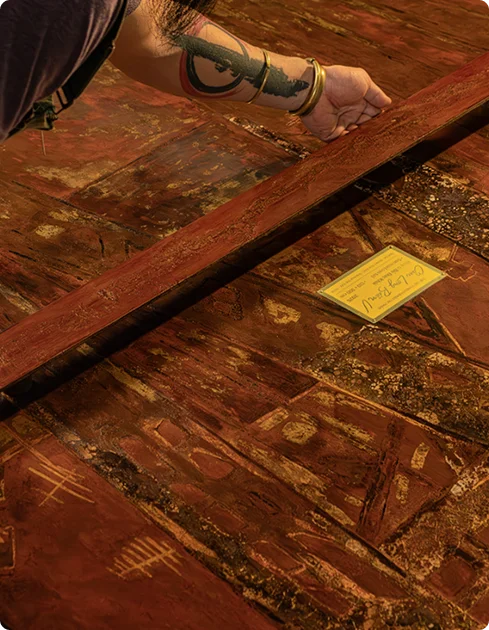
Polishing Away to Reveal the Image
In lacquer, sometimes something must be removed before more can be seen. A lacquer work is built slowly. Each stage prepares the surface for the next, while what has already been created may be covered, hidden, and revealed again later. The process can vary depending on the artist and the work, but at its core is a continuous dialogue between building up and taking away.
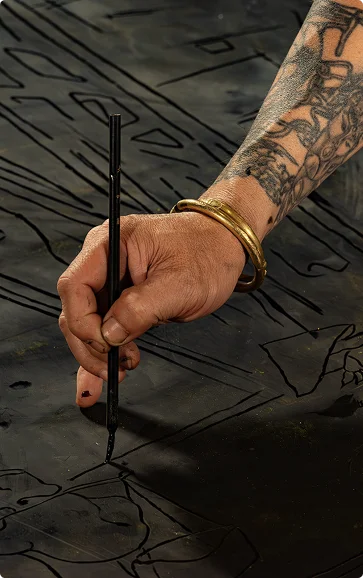
Preparing the Foundation
A strong, even vóc is prepared as the foundation for every layer that follows.
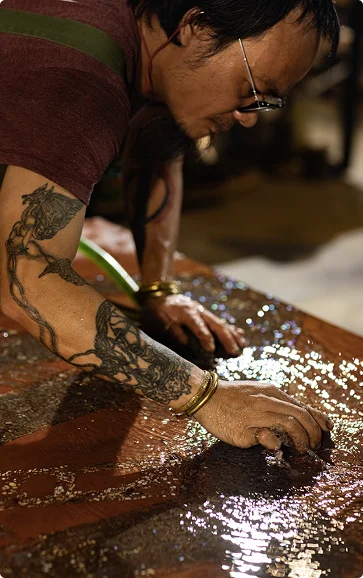
Building the Image
Lacquer, pigments, gold, silver, eggshell, and mother-of-pearl are gradually arranged into the composition.
Layering the Lacquer
Thin coats of lacquer are applied, covering and preserving the materials beneath.
Waiting
Each layer is given time to cure naturally before the next stage begins.
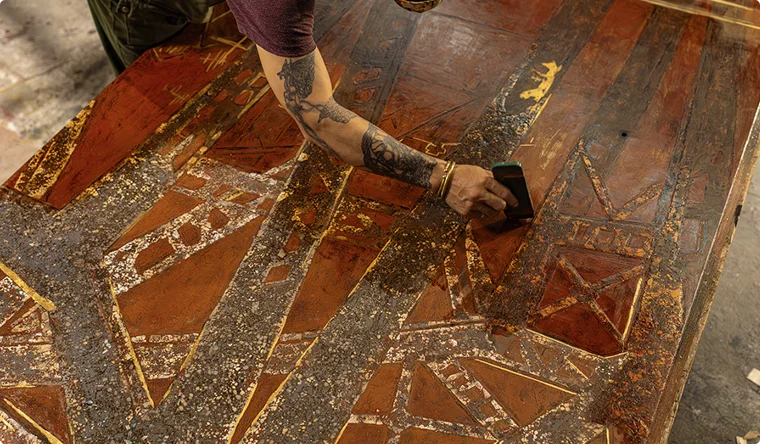
Polishing and Revealing
The surface is carefully polished until hidden colors and materials begin to reappear.
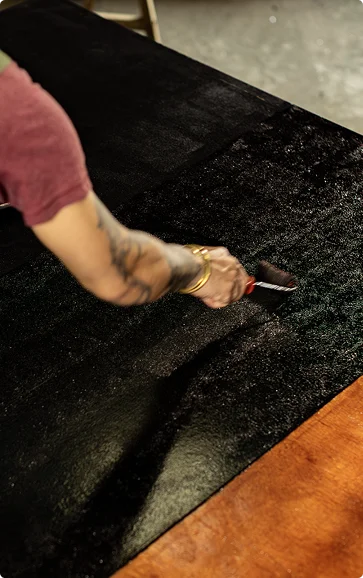
Repeating the Process
Layering and polishing are repeated to build greater depth and complexity.
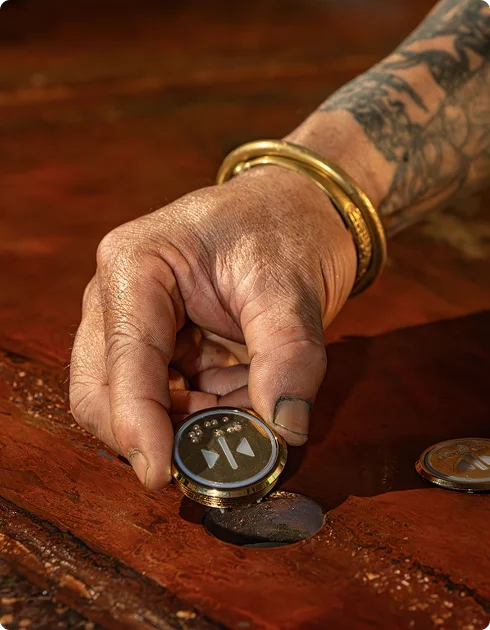
The Final Surface
The work is refined and polished until its final depth, balance, and luminosity emerge.
EVOLUTION
When the Lacquer Craft Became Painting
An ancient craft entered the language of painting and became a distinctive voice of modern Vietnamese art.
Lacquer had long been part of Vietnamese life before becoming a modern painting medium. In the 1930s, artists at the École des Beaux-Arts de l’Indochine began transforming traditional techniques—layering, polishing, gold, silver, and eggshell—into a new artistic language.
Artists such as Nguyễn Gia Trí helped bring lacquer beyond decorative craft, creating a meeting point between tradition, craftsmanship, and modern artistic expression.
CONTINUATION
A Material Still Being Written
Tradition lives not only through what is preserved, but through what can still be created.
Vietnamese lacquer today carries many layers within it: layers of material, of human touch, of craftsmanship, of history, and of memories accumulated across generations.
Yet tradition does not have to stop at repeating what has already existed. Each generation can approach the same material and discover within it another possibility. A new form. A new space. A new way of telling a story.
The value of lacquer, therefore, lies not only in how long it has endured, but also in what it may still become.
From the sap of a tree to the hands of the artisan. From an ancient craft to a language of painting. From works of the past to the spaces of the present.
Lacquer continues its journey.
Each layer follows the one before it. Not to conceal the past, but to allow the past to emerge again in a new form.
Lacquer in Contemporary Spaces
Traditional lacquer finds new expressions through architecture, interiors, and crafted objects — carrying its depth, texture, and memory into contemporary spaces.